
About the Author

Here’s how to tell if it’s real, and why Petrolodex just passed all three.
Type “ISO 9001 certificate” into a UAE search bar and you’ll find something uncomfortable: a documented history of people selling the badge without doing the work behind it.
Back in 2017, an undercover investigation found operators handing out a fully “certified” ISO 9001:2015 certificate for a company that didn’t even exist, for about Dh4,000, delivered in three days. Almost a decade later, the problem hasn’t gone away. It’s exactly why a global body now runs a dedicated public database just to let buyers check if a certificate is real.
So here’s an honest question worth asking before you sign a fuel or chemical supply contract: when a supplier tells you they’re “ISO certified,” do you actually check, or do you just take the logo at face value?
Quick answer: A real ISO certificate has a unique number, a named accreditation body, an issue and expiry date, a surveillance audit schedule, and a way to verify it independently online, usually a URL or QR code tied to the issuer’s live registry. If a supplier can’t produce all of that on request, treat it the same way you’d treat a below-market fuel offer: as a red flag. Petrolodex holds ISO 9001, 14001, and 45001 certifications across both operating entities, issued by an EIAC-accredited body and checkable by anyone.
The Three Standards That Actually Matter For a Fuel Supplier
Not all certifications are created equal, and for petroleum and chemical trading specifically, three of them do real work.
- ISO 9001:2015, Quality Management. This one governs whether a company’s processes are documented, consistent, and repeatable, not “we usually get it right,” but a system that catches errors before they become your problem. For a fuel buyer, that’s the difference between a supplier who can reliably deliver what the paperwork says and one who’s improvising every shipment.
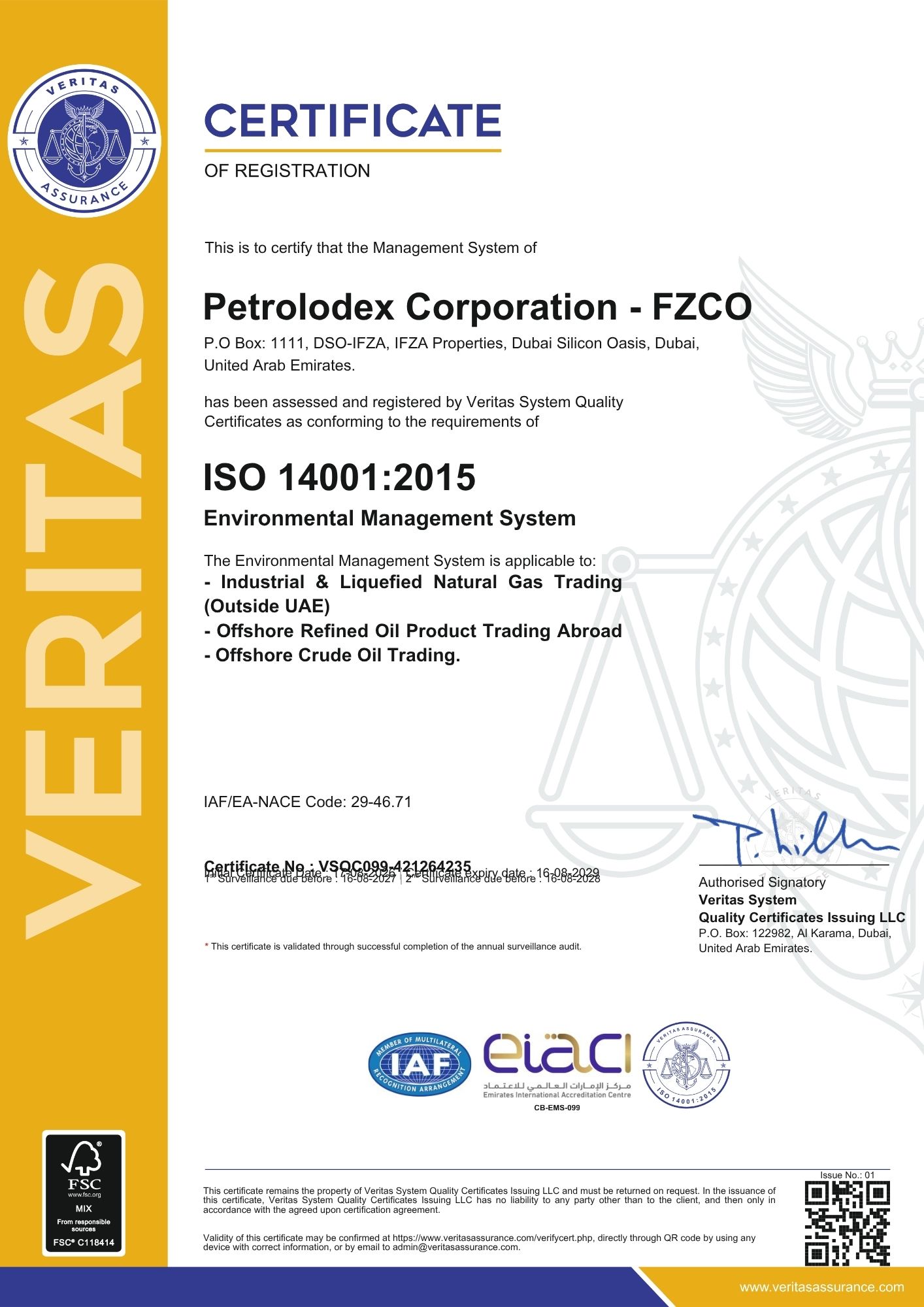
- ISO 14001:2015, Environmental Management. This governs how a company handles the environmental side of moving petroleum and chemical products: storage, spill prevention, waste handling, regulatory compliance. In an industry where a single environmental incident can shut down a terminal or trigger a legal mess that delays your delivery for months, this isn’t a nice to have.
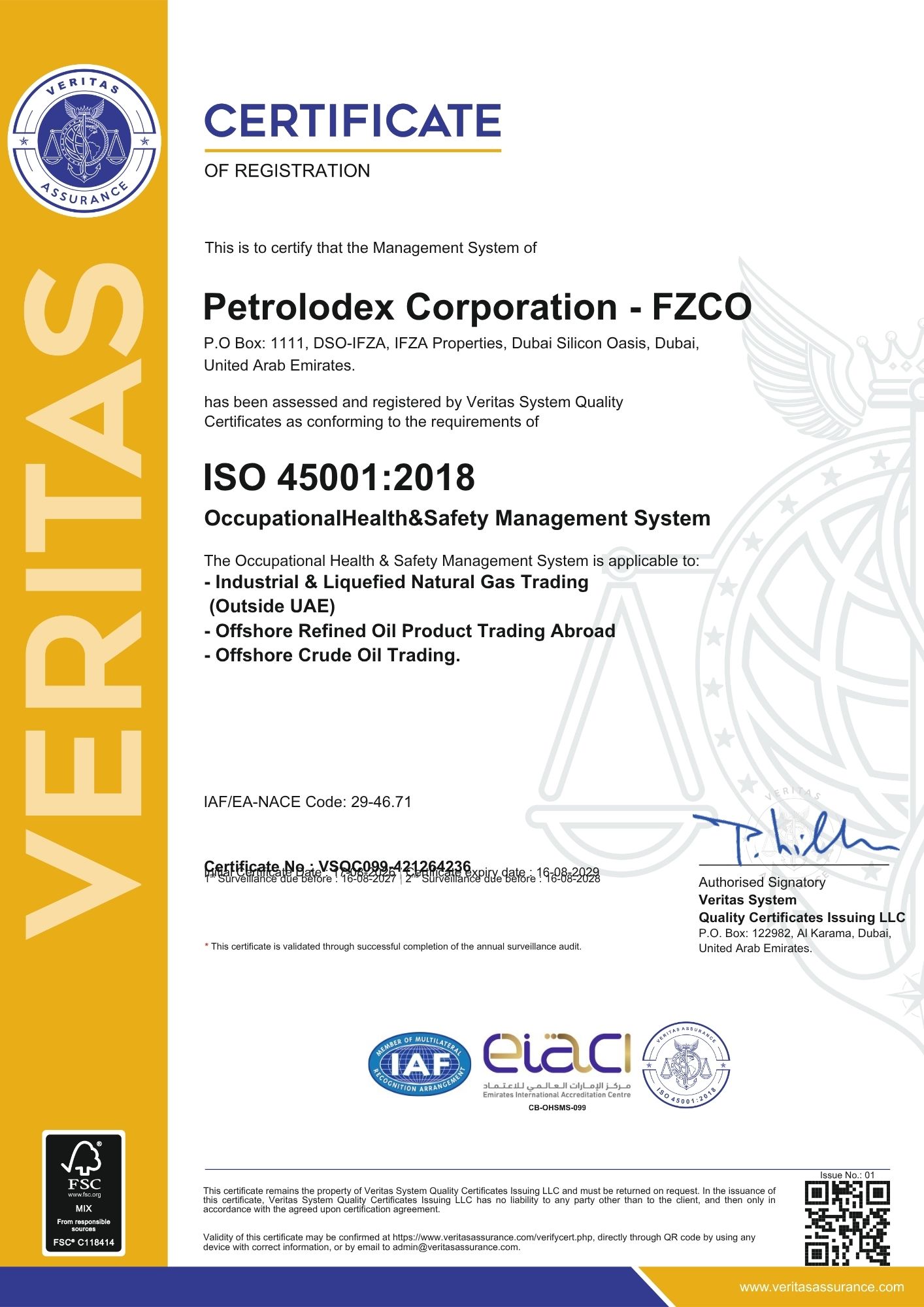
- ISO 45001:2018, Occupational Health and Safety. This governs how a company protects the people physically handling flammable, hazardous cargo. A supplier with weak safety practices isn’t just a risk to their own staff. Safety incidents cause the kind of operational disruptions that show up as your shipment being late, rerouted, or cancelled.
Together, these three standards say something specific. This isn’t a company running on improvisation. It’s a company whose quality, environmental, and safety practices have been independently audited against a recognized standard, and re-audited every year to keep the certificate valid.
How To Actually Verify A Certificate (Most Buyers Never Do This)
Here’s the part that separates a real certification from a printed PDF: verification isn’t optional, and it’s not hard, but almost nobody does it. A certificate is only as trustworthy as your ability to check it against an independent registry, not the document itself, no matter how official it looks.
| What a fake or unverifiable claim looks like | What a real, verifiable certificate has |
| “We’re ISO certified” with no document offered | A certificate you can request and receive immediately |
| No certificate number, or one that isn’t searchable anywhere | A unique certificate number tied to a specific issuing body |
| No accreditation body named or logo shown | A named accreditation body (in the UAE, typically EIAC) with a verifiable registration |
| Certificate has no expiry date or surveillance schedule | Clear issue date, expiry date, and scheduled annual surveillance audits |
| No way to independently confirm it | A verification URL or QR code that checks the certificate against the issuer’s live registry |
If a supplier can’t produce all five of the right-hand column on request, that’s information. The same way an unusually generous discount or a rushed signature deadline is information in a supplier scam.
Where Petrolodex Stands
We didn’t want to just claim these standards. We wanted them independently verified, so you don’t have to take our word for it. Both of our operating entities now hold all three certifications.
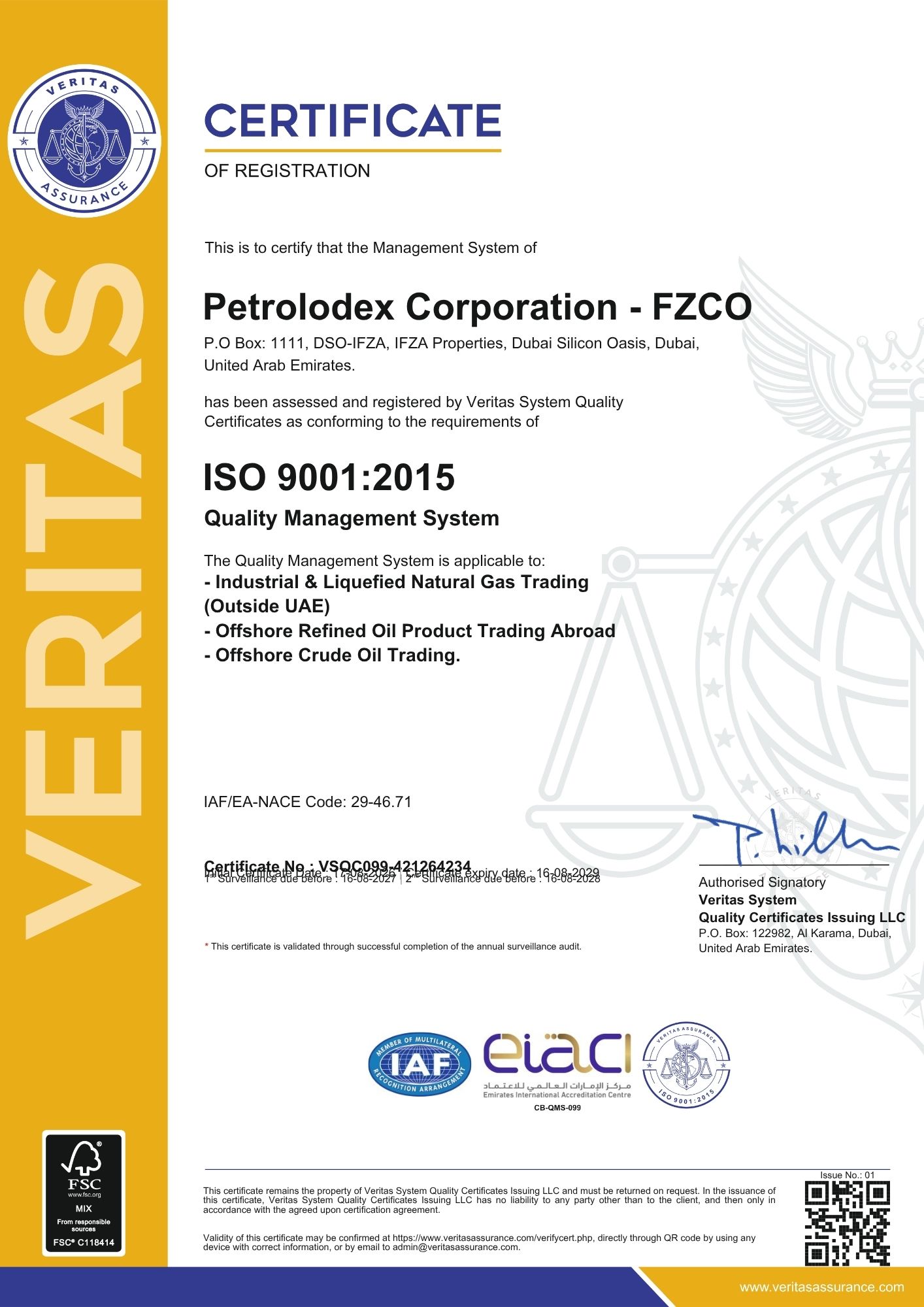
Petrolodex Corporation – FZCO (Dubai Silicon Oasis) is certified for Industrial and LNG Trading (outside UAE), Offshore Refined Oil Product Trading, and Offshore Crude Oil Trading.
Petrolodex FZE (Hamriyah Free Zone, Sharjah) is certified for Import, Export, and Trading of Petroleum Products, Petrochemicals, and Construction Equipment and Machinery Spare Parts.
Both entities were assessed and registered by Veritas System Quality Certificates Issuing LLC, accredited under the Emirates International Accreditation Centre (EIAC), the UAE’s governmental accreditation authority and a recognized member of the International Accreditation Forum (IAF). Certificates were issued August 17, 2026, valid through August 16, 2029, with surveillance audits scheduled before August 2027 and August 2028 to keep them active. Not a one-time badge, but an ongoing check.
Every certificate carries its own unique number and a QR code that verifies directly against the issuer’s registry, so any counterparty can confirm it themselves rather than trusting a logo on a PDF.
Why This Matters On Top Of “No Middleman”
Certification and structure solve two different problems, and together they cover more ground than either does alone. Being principal to principal means there’s no broker chain diluting accountability between you and the product. Being independently certified means the party you’re actually dealing with has had its quality, environmental, and safety practices verified by someone other than themselves. One removes the layers. The other proves what’s on the other side of them is solid.
The Bottom Line
An ISO badge on a website means nothing on its own. Plenty of companies in this region have learned that the hard way, and so have the buyers who trusted them. What matters is whether it’s real, current, and checkable. Petrolodex’s certifications are all three, and we’d rather you verify them yourself than take our word for it.
Talk to us: Talk to Petrolodex about direct-supply fuel and chemical trading, principal to principal, ISO 9001, 14001, and 45001 certified, and verifiable, not just claimed.
Frequently Asked Questions
What does ISO 9001 certification mean for a fuel or chemical supplier?
It means the supplier’s operational processes, order handling, documentation, delivery, quality control, have been independently audited against a recognized quality management standard, and are re-audited annually to keep the certification active. It’s evidence of consistency, not a one-time claim.
How can I check if a supplier’s ISO certificate is actually real?
Ask for the certificate itself, then check three things independently: the certificate number against the issuing body’s own registry, the accreditation body’s logo against that body’s official site (in the UAE, that’s typically EIAC), and the verification URL or QR code printed on the certificate. If any of those checks fail or the supplier can’t provide the document, treat that as a red flag.
Why does ISO 14001 matter specifically for petroleum and chemical trading?
Environmental incidents in this industry, spills, improper storage, non-compliant waste handling, can trigger terminal shutdowns, regulatory penalties, and legal disputes that directly delay or disrupt your supply. ISO 14001 certification means a supplier’s environmental management practices have been independently verified, reducing that operational risk.
Does ISO 45001 certification affect how reliably a supplier can deliver?
Yes, indirectly but significantly. Suppliers with weak health and safety practices are more prone to incidents that halt operations, and an operational halt at your supplier is a delayed shipment for you. ISO 45001 certification means those practices meet an independently audited safety standard.
Is Petrolodex a broker, or does it hold these certifications as the actual trading entity?
Petrolodex trades principal to principal. We are the entity you contract with directly, with no broker or intermediary layer. Both of our operating entities, Petrolodex Corporation – FZCO and Petrolodex FZE, hold the ISO 9001, 14001, and 45001 certifications directly, issued by Veritas System Quality Certificates Issuing LLC under EIAC accreditation.