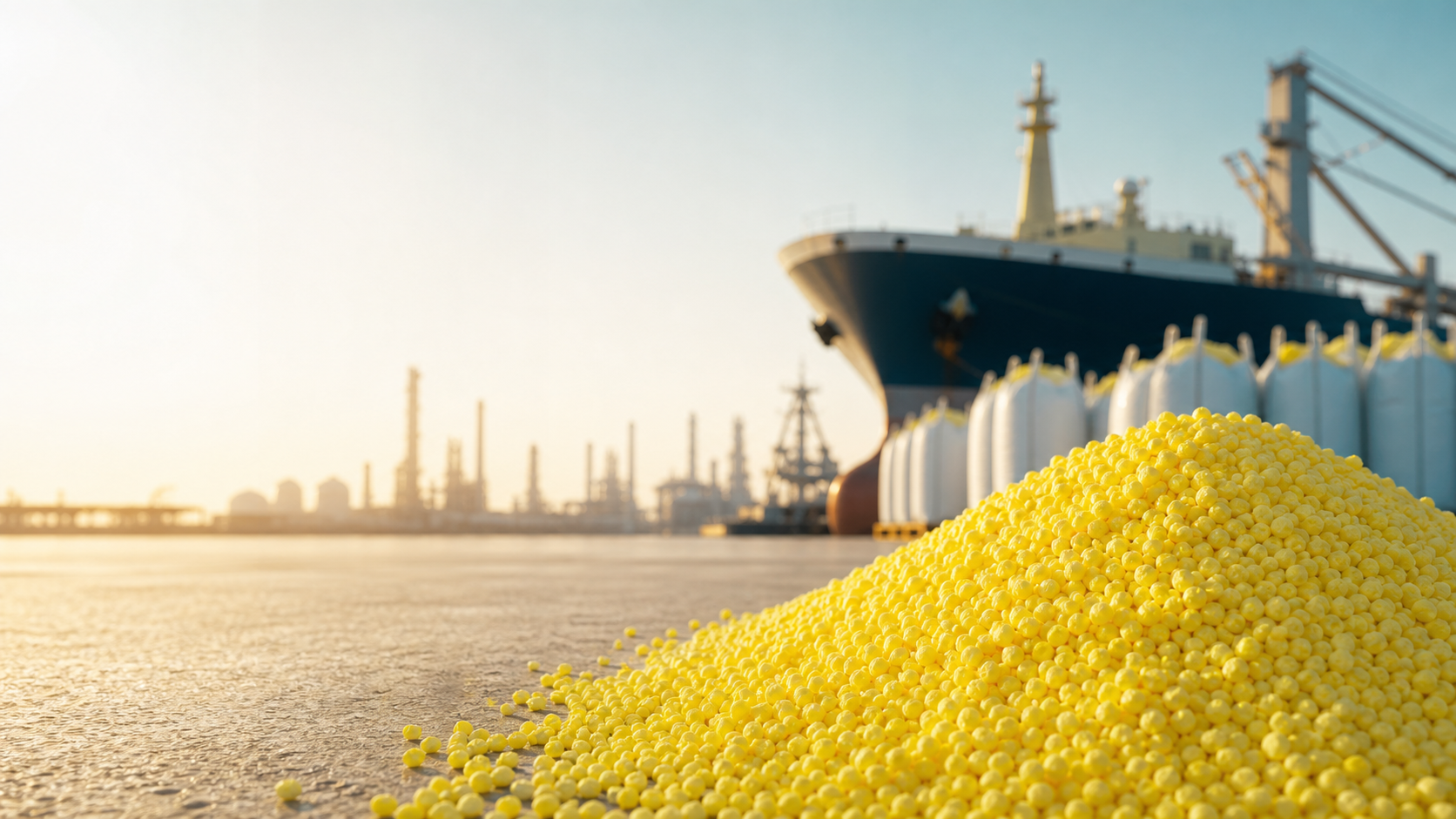
Granular sulphur is elemental sulphur recovered from crude oil refining and natural gas processing, then formed into dense, free flowing spheres typically 2 mm to 6 mm across. The granulation process builds each granule by coating a seed particle with successive layers of molten sulphur, cooling each layer before the next is applied. The result is a hard, low dust granule that survives long ocean voyages, repeated transfer, and open stockpiling without breaking down into fines. It is also referred to as sulfur in North American markets.
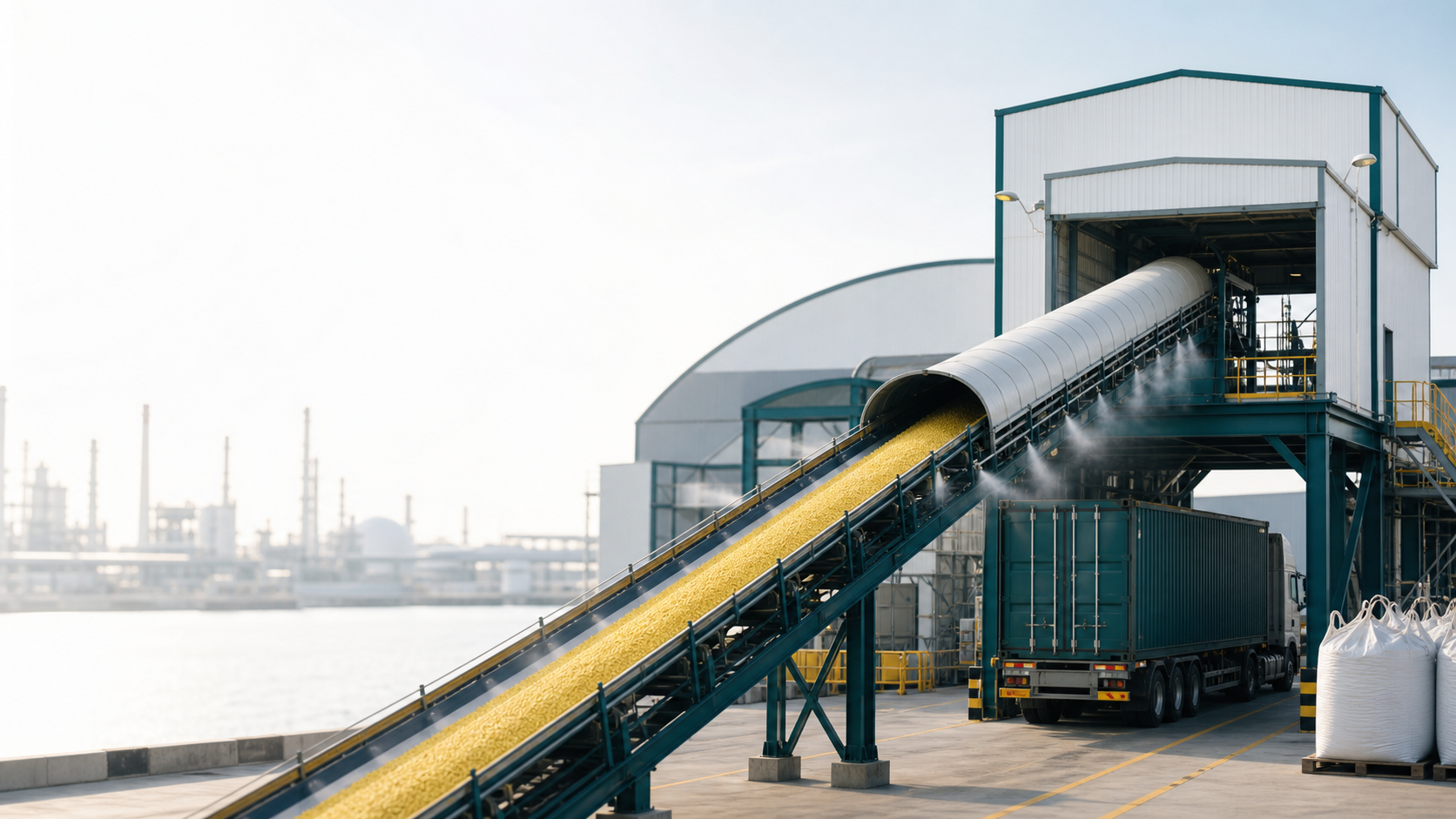
Granular sulphur is the most widely traded solid sulphur form in the world because it moves cleanly. Set against lump or slate, it releases far less dust in transit and handling, loses less product to fines, and loads and discharges faster at port. That combination makes it the default specification for phosphate fertilizer producers, sulphuric acid plants, mining operations running leach circuits, and chemical manufacturers who need consistent feedstock quality arriving on schedule.
Purity is the primary commercial variable. Standard export grade runs 99.5% minimum sulphur content and serves the bulk of fertilizer and acid demand. Grades at 99.8% and 99.9% carry tighter ash, carbon, and acidity limits, and are specified by refineries, chemical processors, and any operation where trace contaminants affect downstream yield or catalyst life.

:quality(85))